DragonSword: Awakening Combat Guide
Quick answer
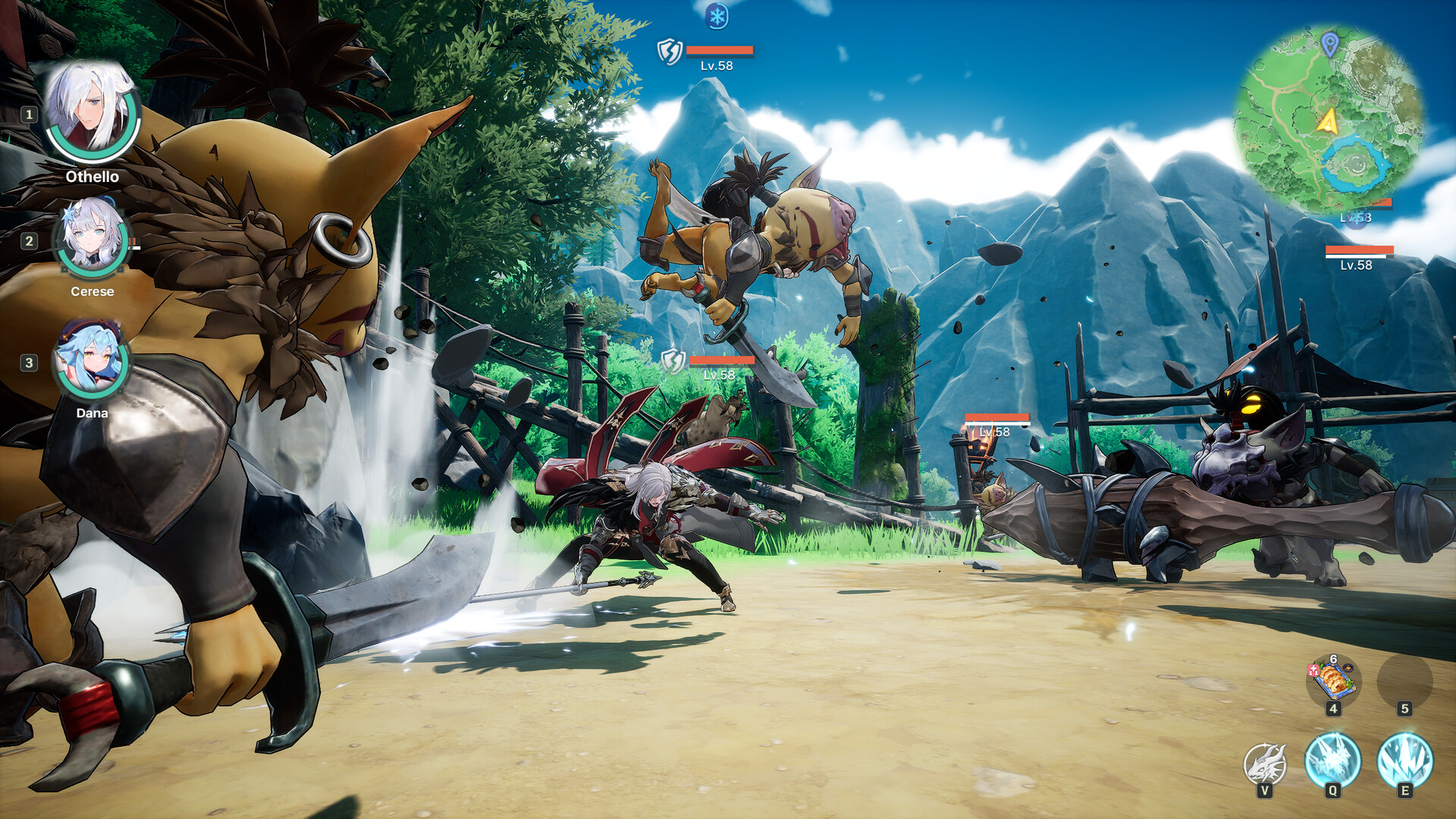
DragonSword: Awakening combat runs on a three-step loop. Attack until a status ailment fills on the enemy, wait for the Signal Skill prompt to appear, then tag in a hero whose Signal Skill answers that ailment — the incoming hero opens with an automatic high-damage follow-up. Your three-hero team is built around covering setup, break and burst.
Updated · Verified on Patch 1.0.x · Sources: in-game testing, Steam store page, Hound13 announcements
If you came from a single-character action RPG, DragonSword: Awakening will feel unusual for the first few hours. You are not playing one hero with a combo tree. You are playing three heroes as a single relay, and the handoffs are where the damage is.
The core loop in three steps
- Apply. Attack with a fast hero until a status ailment gauge fills on the enemy. Different heroes apply different ailments — this is the main thing that separates them.
- Signal. When an ailment lands, a Signal Skill prompt appears for any benched hero whose skill answers that specific ailment.
- Tag. Swap to that hero. They enter with an automatic high-damage follow-up rather than a normal attack, and the ailment is consumed or escalated.
Repeat with your third hero to extend the chain. A full rotation through all three heroes with the correct ailment answers at each step is what DragonSword: Awakening means by a tag combo, and it produces several times the damage of simply attacking.
What each subsystem does
| System | What it governs | Guide |
|---|---|---|
| Status ailments | Nine conditions, split into physical and elemental, that gate everything else | Status ailments |
| Signal Skills | The prompt that tells you which benched hero can answer the current ailment | Signal Skills |
| Tag combos | Chaining three heroes' answers into a single uninterrupted sequence | Tag combos |
| Break | The stagger gauge that opens the big damage windows on bosses | Break gauge |
| Team composition | Covering setup, break and burst across three heroes | Best teams |
Setup, break, burst — the composition rule
Almost every effective DragonSword: Awakening team follows the same three-role structure, regardless of which specific heroes you own:
- Setup. A hero who reliably applies an ailment quickly. Freeze, Poison and Shock applicators sit here.
- Break. A hero who converts that ailment into a stagger or a launch — Break, Knockdown and Airborne.
- Burst. A hero who extends the window and detonates it, usually Bleed or aerial damage.
Missing any one of the three is what makes a team feel bad even when every hero in it is individually strong. Our team builder checks exactly this: it takes the heroes you actually own and tells you which link in the chain you are missing.
Physical and elemental ailments
The nine ailments divide into two families, and the division matters because it determines what your setup hero can reliably do against a given enemy.
- Physical: Stun, Down, Airborne, Break
- Elemental: Burn, Chill (Freeze), Poison, Shock, Bleed
Physical ailments tend to control the enemy's actions; elemental ailments tend to escalate damage over time or gate a specific follow-up. Bosses commonly resist one family more than the other, which is why a team with only elemental setup struggles against certain encounters. Full details are on the status ailments page.
Timing is the skill ceiling
Two things separate players who find DragonSword: Awakening's combat satisfying from players who find it mushy:
Reacting to the prompt, not to the gauge. New players watch the ailment bar and swap early, which wastes the follow-up. Watch for the Signal Skill prompt itself, which appears on the party order at the left of the screen.
Not lowering Effects Quality. Ailment build-up, Signal prompts and Break indicators are all communicated through combat VFX. If you have dropped Effects Quality to chase frame rate, you have also dropped your ability to read the fight — see best settings. Frame-time spikes cause the same problem for a different reason, which is why the FPS guide recommends a stable 40 or 60 fps over an unstable 90.
Where to go from here
New players should read the beginner guide first, then status ailments. Players who have finished the story and are pushing Tower of Trials will get more from best team comps and the tier list.
FAQ
How does combat work in DragonSword: Awakening?
You apply a status ailment with one hero, wait for the Signal Skill prompt, then tag in a hero whose skill answers that ailment for an automatic high-damage follow-up.
How many heroes are in a DragonSword: Awakening team?
Three. You control one at a time and swap between them, including in co-op Hunts and Raids where each player brings a full team of three.
What is the best team composition in DragonSword: Awakening?
Any team that covers setup (applies an ailment), break (converts it to a stagger or launch) and burst (detonates the window). See best team comps.
Is DragonSword: Awakening combat hard?
The basics are forgiving, but the damage ceiling depends on reacting to Signal Skill prompts quickly. Timing, not stats, is the main skill gap.